

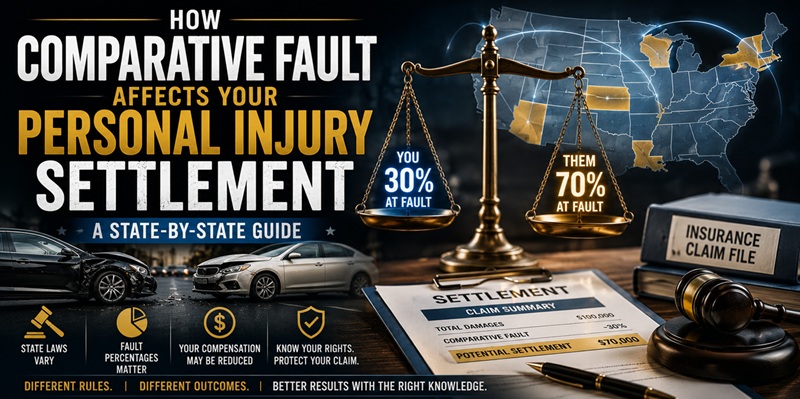
Comparative fault determines how much personal injury compensation you can recover when you share some blame for an accident.
U.S. states use one of four systems: pure contributory negligence, pure comparative negligence, modified comparative negligence (50% or 51% bar), or South Dakota’s unique slight/gross rule.
Key Takeaways
- Four fault systems exist across U.S. states and territories.
- Five jurisdictions (Alabama, Maryland, North Carolina, Virginia, Washington D.C.) bar recovery if you’re even 1% at fault.
- Ten states allow recovery even at 99% fault under pure comparative negligence.
- Thirty-five states use modified comparative negligence with a 50% or 51% bar.
- Louisiana switched from pure to modified comparative fault on January 1, 2026.
- Your fault percentage directly reduces your settlement dollar amount.
What Is Comparative Fault?
Comparative fault is the legal principle that when multiple parties contribute to an accident, each party’s compensation is reduced by their share of responsibility. A jury or insurance adjuster assigns a percentage of fault — for example, 30% to the plaintiff and 70% to the defendant.
How Fault Reduces Compensation
If your total damages are $100,000 and you’re found 30% at fault, your recovery in a comparative negligence state is $70,000. In a strict contributory negligence state, that same 30% finding reduces your recovery to zero.
The Four Fault Systems in U.S. States
Pure Contributory Negligence
Five jurisdictions still bar recovery if the plaintiff bears any fault — even 1%. These are Alabama, Maryland, North Carolina, Virginia, and Washington D.C. This is the harshest system for injury victims.
Pure Comparative Negligence
Ten states let you recover damages no matter how high your fault share, including 99%. Your award is reduced by your percentage of fault. These states are Alaska, Arizona, California, Kentucky, Mississippi, Missouri, New Mexico, New York, Rhode Island, and Washington.
Modified Comparative Negligence — 50% Bar
About eleven states bar recovery if your fault is 50% or higher. You can recover at 49% fault, but not at 50%. These include Arkansas, Colorado, Georgia, Idaho, Kansas, Maine, Nebraska, North Dakota, Tennessee, Utah, and West Virginia.
Modified Comparative Negligence — 51% Bar
Twenty-four states bar recovery only when your fault reaches 51%. You can still recover at 50%. These include Connecticut, Delaware, Florida, Hawaii, Illinois, Indiana, Iowa, Louisiana (effective January 1, 2026), Massachusetts, Michigan, Minnesota, Nevada, New Jersey, Ohio, Oregon, Pennsylvania, South Carolina, Texas, Vermont, and Wisconsin, among others.
South Dakota’s Slight/Gross Rule
South Dakota uses a unique fourth approach. A plaintiff can recover only if their negligence was “slight” compared to the defendant’s “gross” negligence — and damages are still reduced by the plaintiff’s fault percentage.
Latest Update (2026)
Louisiana Switches to Modified Comparative Fault
Effective January 1, 2026, Louisiana Civil Code Article 2323 was amended to replace pure comparative fault with a modified 51% bar. Plaintiffs found 51% or more at fault now recover nothing — a major shift from the prior rule, where someone 95% at fault could still recover 5% of damages.
Maryland and D.C. Add Vulnerable Road User Exceptions
In 2025, Maryland and Washington D.C. amended their strict contributory negligence laws to add exceptions for “vulnerable road users” — pedestrians, cyclists, scooter riders, and people using personal mobility devices. In crashes involving these users, a comparative fault system with a 51% bar now applies.
Florida Continues Under 2023 Modified Rule
Florida’s 2023 switch from pure comparative negligence to a 51% bar remains in effect. Combined with the state’s two-year statute of limitations, the rule sharply limits recovery for partly-at-fault plaintiffs.
What This Means for Consumers
- Know your state’s rule before negotiating. The same 30% fault finding produces very different outcomes across state lines.
- Document evidence that minimizes your fault percentage. Photos, witness statements, dashcam footage, and police reports all matter.
- Be careful with recorded statements. An insurance adjuster’s first question is often designed to establish your fault share.
- The state where the accident happened controls — not the state where you live.
- Insurance settlements use the same fault framework as trials, so the rule matters even if you never file suit.
Frequently Asked Questions
How is my fault percentage decided?
A jury decides at trial, but most cases settle. In negotiations, insurance adjusters assign a percentage based on police reports, witness accounts, and physical evidence. Both sides argue for a lower client share.
Can I still get money if I was mostly at fault?
Only in pure comparative negligence states. In modified states, you must be under the 50% or 51% threshold. In contributory negligence jurisdictions, any fault bars recovery, with limited exceptions for vulnerable road users in Maryland and D.C.
Does comparative fault apply to insurance claims?
Yes. Insurance settlements follow the same framework as court verdicts. Adjusters apply the state’s bar rule when evaluating offers.
Which state’s law applies if I’m injured while traveling?
Usually the state where the accident occurred — not where you live. Courts apply this rule, known as lex loci delicti, in most personal injury cases.
Can comparative fault affect a settlement before trial?
Yes — heavily. Most cases settle, and the expected fault split drives the dollar amount. Insurers may offer 60% of damages if they expect a jury to assign 40% fault to you.
This article is for informational purposes only and is not legal advice. Consult a licensed attorney in your state.